Understanding the Hazards: Risks of DIY Commercial Exterior Cleaning Methods You Should Know

DIY commercial exterior cleaning may appear cost‑effective, but it carries substantial risks that can cause property damage and safety incidents. This article reviews common DIY errors, hazards from improper techniques, and the role of professional services. It explains specific risks—including chemical misuse and safety oversights—and outlines precautions property owners should follow so they can decide when to engage qualified experts.
What Are the Common Mistakes in DIY Commercial Exterior Cleaning?
Many property owners attempt DIY exterior cleaning without the required knowledge or equipment, which leads to common mistakes:
- Using Incorrect Cleaning Solutions : Many individuals use harsh chemicals that can damage surfaces or harm the environment.
- Improper Equipment Use : Using pressure washers without understanding their settings can lead to surface damage or injury.
- Neglecting Safety Precautions : Failing to wear protective gear or assess the cleaning environment can result in accidents.
These mistakes reduce cleaning effectiveness and can result in costly repairs. For reliable, safe results, consider professional services such as Patriot Softwash .
How Do Improper Pressure Washing Techniques Cause Property Damage?
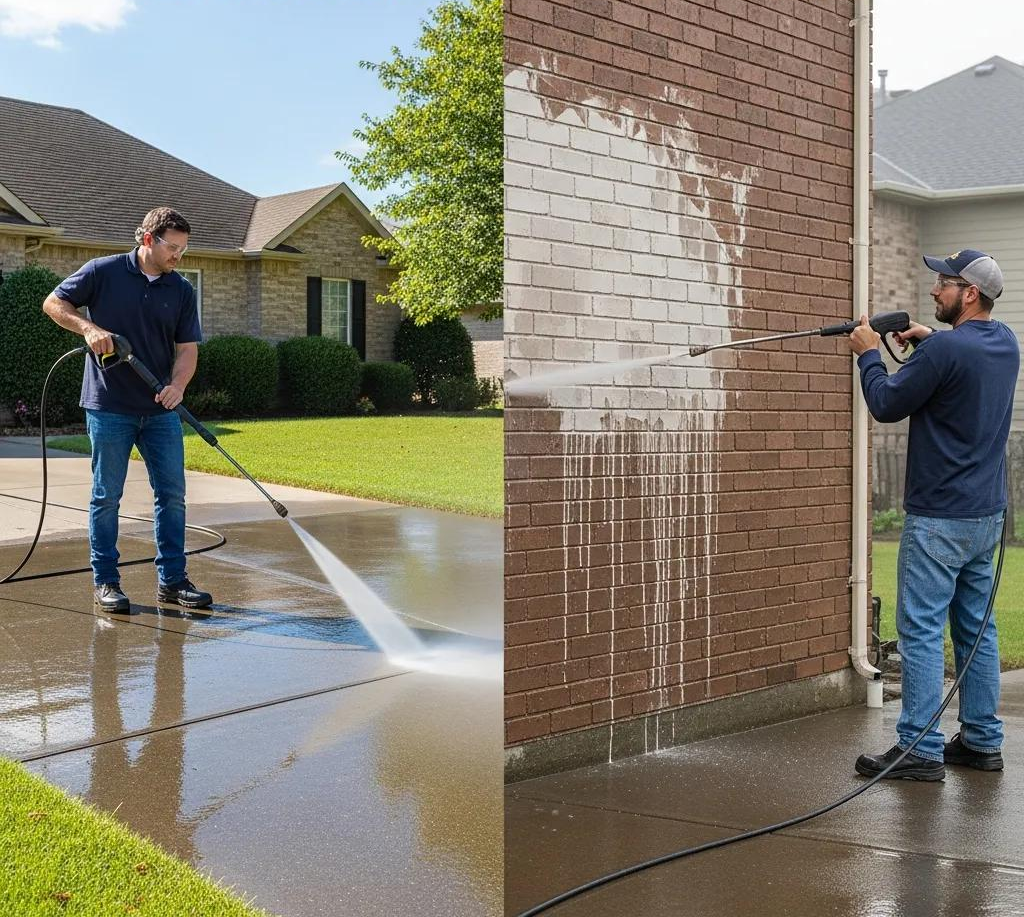
Incorrect pressure‑washing techniques—excessive pressure, wrong nozzle, or improper angle—can strip paint, damage siding, and etch concrete. Water driven into joints or behind cladding can promote mold and structural issues. Using the correct settings and methods preserves property integrity while delivering a clean exterior.
What Chemical Misuses Increase Cleaning Hazards?
Misuse of cleaning chemicals creates health and safety hazards. Common problems include:
- Using Bleach on Certain Surfaces : Bleach can damage wood and certain types of siding, leading to discoloration and degradation.
- Mixing Chemicals : Combining different cleaning agents can create toxic fumes, endangering the user and others nearby.
- Improper Dilution : Using concentrated solutions without proper dilution can lead to surface damage and health hazards.
Follow manufacturer directions and choose chemicals formulated for the specific surface to reduce these hazards.
What Safety Precautions Should You Follow for Exterior Cleaning?
Adhering to safety precautions protects both people and property. Key safety measures include:
- Wearing Protective Gear : Always use gloves, goggles, and masks to protect against chemical exposure and debris.
- Assessing the Environment : Check for hazards such as electrical lines, unstable surfaces, or weather conditions that could affect safety.
- Using Equipment Properly : Familiarize yourself with the equipment and follow all operational guidelines to prevent accidents.
Applying these measures lowers the chance of injury and property damage during cleaning tasks.
| Safety Measure | Description | Importance |
|---|---|---|
| Protective Gear | Use gloves, goggles, and masks | Prevents chemical exposure and injuries |
| Environmental Assessment | Check for hazards | Ensures a safe working environment |
| Equipment Familiarity | Understand how to use tools | Reduces risk of accidents |
These precautions are necessary for anyone considering DIY exterior cleaning to keep the task as safe as possible.
Which Protective Equipment Minimizes Chemical and Equipment Risks?

Proper personal protective equipment reduces chemical and equipment risks. Essential items include:
- Gloves : Protect hands from harsh chemicals and sharp objects.
- Goggles : Shield eyes from splashes and debris.
- Respirators : Prevent inhalation of harmful fumes and dust.
Using quality protective gear substantially improves safety during exterior cleaning.
How Can You Safely Prepare and Apply Cleaning Solutions?
Safe preparation and application of cleaning solutions requires these steps:
- Read Labels : Always read and follow the instructions on cleaning product labels to ensure safe use.
- Dilute Properly : Ensure that cleaning solutions are diluted according to the manufacturer’s recommendations to avoid damage.
- Test on Small Areas : Before applying a solution to the entire surface, test it on a small, inconspicuous area to check for adverse reactions.
Following these steps minimises risk while producing effective cleaning outcomes.
How Do Pressure Washing and Soft Washing Differ in Safety and Effectiveness?
Pressure washing and soft washing are distinct methods with different safety and effectiveness profiles.
- Pressure Washing : Utilizes high-pressure water to remove dirt and grime. While effective for hard surfaces, it can cause damage if not used correctly.
- Soft Washing : Employs low-pressure water combined with specialized cleaning solutions. This method is safer for delicate surfaces and reduces the risk of damage.
Select the method that suits the surface to achieve effective cleaning without unnecessary risk.
What Are the Risks Associated with Pressure Washing?
Pressure washing carries several risks, including:
- Surface Damage : High pressure can strip paint, damage siding, and etch concrete.
- Injury Risks : Improper handling of equipment can lead to accidents and injuries.
- Water Infiltration : Incorrect techniques can allow water to enter structures, leading to mold and structural damage.
Recognising these risks is essential before choosing pressure washing.
How Does Soft Washing Reduce Chemical Exposure and Surface Damage?
Soft washing provides a safer alternative by using lower pressure with specialised cleaning solutions. It cleans surfaces effectively without the damage associated with high‑pressure water. When biodegradable solutions are used, soft washing also reduces chemical exposure and environmental impact, protecting surface integrity and promoting a healthier cleaning process.
Why Should You Choose Professional Exterior Cleaning Over DIY Methods?
Hiring professional exterior cleaners, such as Patriot Softwash , delivers clear benefits over DIY. Professionals apply appropriate techniques and products for each surface, improving results and reducing the risk of damage. They also bring safety practices and equipment that most property owners lack, offering greater assurance and consistent outcomes.
What Benefits Do Professional Services Offer in Hazard Prevention?
Professional services reduce hazards in several ways:
- Expert Knowledge : Professionals understand the best practices for various surfaces and cleaning methods.
- Safety Compliance : They adhere to safety regulations, reducing the risk of accidents.
- Quality Equipment : Access to specialized equipment ensures effective cleaning without damage.
These advantages demonstrate why engaging professionals is particularly important for commercial properties.
When Is It Essential to Hire Experts for Commercial Exterior Cleaning?
You should hire experts in situations such as:
- Complex Structures : Buildings with intricate designs or hard-to-reach areas require professional expertise.
- Severe Stains or Damage : When surfaces are heavily stained or damaged, professionals can assess and address the issues effectively.
- Time Constraints : Businesses with limited time for maintenance can benefit from the efficiency of professional services.
Identifying these conditions helps owners determine when to contract professional assistance.
What Do Recent Case Studies and Texas Regulations Reveal About DIY Cleaning Risks?
Recent case studies and Texas regulations highlight the risks of DIY cleaning. Improper practices have resulted in regulatory violations and legal consequences for property owners. Studies also link DIY methods to higher rates of property damage claims, underscoring the need to follow safety standards and applicable regulations. This context helps owners choose safer cleaning approaches.
How Have Improper DIY Methods Led to Property Damage Claims?
Improper DIY methods often produce property damage claims, typically from negligence or lack of expertise. Common causes include:
- Inadequate Surface Preparation : Failing to prepare surfaces properly can lead to damage during cleaning.
- Incorrect Chemical Use : Using the wrong chemicals can cause irreversible damage to surfaces.
- Neglecting Safety Protocols : Ignoring safety measures can result in accidents and injuries.
These factors underscore the value of professional cleaning to reduce risk and protect property investments.
What Texas-Specific Rules Govern Commercial Exterior Cleaning Safety?
Texas rules for commercial exterior cleaning focus on safety and environmental protection. Key provisions include:
- Chemical Use Regulations : Specific guidelines dictate the types of chemicals that can be used for cleaning to protect the environment.
- Safety Training Requirements : Workers must undergo safety training to ensure compliance with safety standards.
- Equipment Standards : Regulations specify the types of equipment that must be used to minimize risks during cleaning.
Familiarity with these rules ensures compliance and safer cleaning operations for both owners and contractors.
Frequently Asked Questions
What are the signs that indicate a need for professional exterior cleaning services?
Signs you need professional exterior cleaning include visible mold or mildew, pronounced staining or discoloration, and deposits that resist standard cleaning methods. Peeling paint or damaged siding also indicate the need for professional assessment. If routine maintenance has been delayed, consider engaging experts.
How can property owners assess the effectiveness of their DIY cleaning efforts?
Assess DIY results by inspecting treated surfaces for uniform appearance, absence of stains, and the overall condition of materials. If surfaces remain dirty or grime returns quickly, the methods or products used may be inadequate. In such cases, professional cleaning can provide more durable, thorough results.
What environmental impacts should be considered when choosing cleaning methods?
Consider the environmental effects of chemicals and techniques. Harsh agents can harm ecosystems and contaminate water. Choose biodegradable, low‑toxicity cleaners and methods—such as soft washing—that reduce environmental impact while still delivering effective cleaning.
What training or certifications should professional cleaners have?
Professionals should hold training and certifications that confirm safe practices, chemical handling, and equipment operation. Look for recognised credentials from industry bodies, such as the Institute of Inspection, Cleaning and Restoration Certification (IICRC). Training in safety protocols, environmental compliance, and customer service further assures quality.
How can property owners prevent future damage after cleaning?
To prevent future damage, establish a regular maintenance schedule with inspections and timely cleaning. Apply protective coatings or sealants to shield surfaces from dirt, moisture, and UV. Address underlying issues, such as leaks or structural defects, promptly and use products recommended for each material.
What are the potential legal implications of improper DIY cleaning?
Improper DIY cleaning can create legal liability for property damage or personal injury. Damage to neighbouring property or injuries caused during cleaning can lead to claims or lawsuits. Non‑compliance with local chemical and safety regulations may result in fines. Adhering to regulations and best practices reduces legal risk.
What should be included in a cleaning contract with a professional service?
A professional cleaning contract should specify the scope of work, methods, and products to be used. It should include the project timeline, payment terms, any guarantees or warranties, and liability insurance details. Clear documentation and communication protect both parties and support a successful outcome.
Conclusion
Recognising the risks of DIY commercial exterior cleaning helps property owners protect investments and maintain safety. By understanding hazards such as improper techniques and chemical misuse, owners can determine when to hire qualified professionals. Expert services improve cleaning outcomes and reduce the likelihood of damage or regulatory issues. For a safer, more efficient solution, consider professional exterior cleaning options.